
How to Overcome Social Anxiety and Step Into Confidence
Have you ever felt a wave of dread the moment you received an invitation to an office holiday party? You know it’s good for your professional image to attend, but the mere thought of small talk—and the internal chorus of self-criticism that often accompanies it—can be paralyzing.
Social anxiety at holiday events is not uncommon, especially for those who’ve experienced unresolved trauma. The stress of forced socializing, combined with self-defeating thoughts like “I’m awkward” or “They don’t want to talk with me,” can make the entire season feel like one big challenge.
In this post, you’ll explore:
How childhood wounds can fuel social anxiety and self-doubt
How to tell the difference between social anxiety disorder and everyday nervousness
Why negative thoughts and physical symptoms show up in social settings
How trauma therapy, including EMDR therapy, helps rewire fear at the root
Social anxiety tips you can try right now to feel less anxious and more grounded
How Childhood Wounds Fuel Social Anxiety
At the heart of social anxiety disorder, also knowns as social phobia, lies a deep-seated fear of judgment or rejection. As the holiday party approaches, thoughts like “I’m not wanted” or “I’m not interesting” may play on repeat. These feelings often trace back to early life experiences—perhaps a parent who appeared disinterested or peers who bullied and excluded you. Over time, these moments of wounding can evolve into powerful beliefs that shape how you view social gatherings.
Feeling uninteresting or awkward in group settings.
Distracting themselves with food, drinks, or quick exits to cope.
Dreading forced interactions, even when they know attendance is important.
For many people with social anxiety, these negative self-perceptions have persisted from adolescence into adulthood. Without intervention, they can remain a significant barrier to forming meaningful connections and enjoying social events, especially during the holidays.
Is This Social Anxiety Disorder, or Just Feeling Anxious in Social Situations?
Feeling anxious in a social situation doesn’t automatically mean you have social anxiety disorder. Many people feel nervous when meeting new people, speaking up at work, or participating in social events. That’s part of being human.
Social anxiety disorder is different. It’s a mental health disorder where fear or anxiety consistently shows up in social interaction and has a real impact on your life. People with social anxiety disorder often avoid social situations, not because they don’t care, but because the anxiety feels overwhelming.
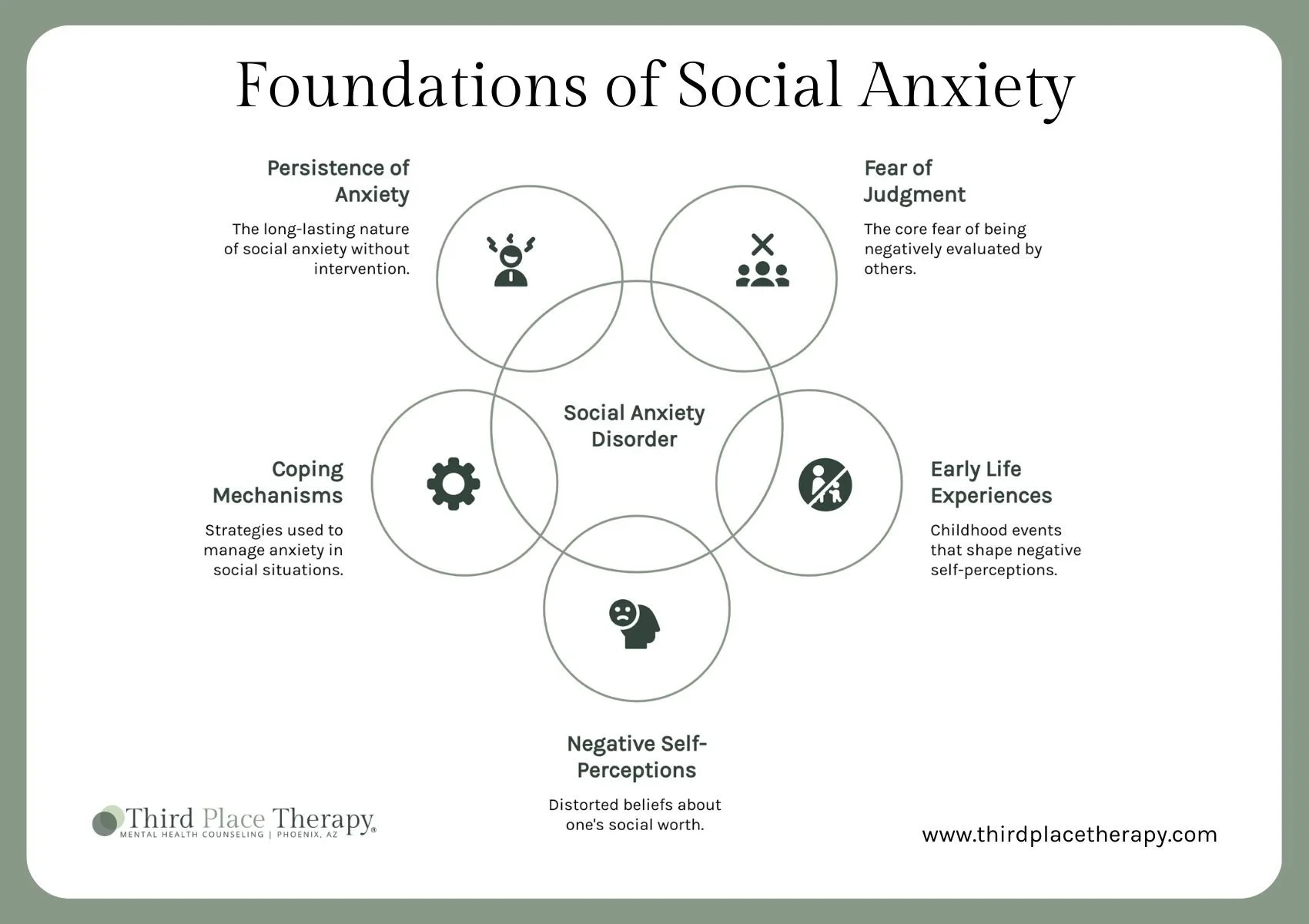
Common symptoms of social anxiety disorder
You might notice:
Intense fear of social situations where you could be judged
Physical symptoms like sweating, a racing heart, or feeling shaky
Strong negative thoughts before, during, or after social interaction
Avoiding specific social situations or enduring them with distress
Social anxiety disorder in adults can look subtle. You might still go to events but feel exhausted afterward or replay everything you said. Anxiety isn’t a personal failure, and it doesn’t mean you’re weak or antisocial.
Rewiring Negative Beliefs Through Trauma Therapy
From a professional standpoint, social anxiety doesn’t simply vanish with a few self-help tricks—it often requires unpacking past experiences that shaped your perception of safety in relationships. As a therapist offering trauma therapy, I see how early wounds can manifest as a constant internal dialogue of self-doubt. When you enter a social setting, your nervous system may interpret it as a threat, triggering the fight-or-flight response.
Compassionate Inquiry: Exploring the root causes of your anxiety can offer a renewed sense of self-compassion. Recognizing that your anxious thoughts originated from real experiences helps you treat yourself with more kindness.
Therapeutic Techniques: Approaches like EMDR therapy are designed to help reprocess traumatic memories, allowing you to replace self-critical and negative thoughts with more empowering ones.
Holistic Integration: In addition to individual therapy, services like relationship therapy or grief counseling can address other dimensions of your life affected by trauma, creating a comprehensive support system.
By combining techniques that directly address trauma with practical strategies for managing anxiety in social settings, you can gradually rewire long-standing beliefs. This shift frees you to show up at events—from holiday gatherings to everyday meetups—with greater confidence and calm.
What causes social anxiety?
Causes of social anxiety often include shyness, early criticism, fear of judgment, anxiety and depression, or past experiences that taught your brain social interaction wasn’t safe.
Practical Steps to Manage Social Anxiety
The following suggestions can help you handle group settings with more ease:
Shift Your Thinking
Recognize negative narratives like “I’m not wanted” and replace them with neutral or positive statements, such as “My presence matters.”
Seek evidence from your past that supports these more balanced thoughts, times when others genuinely enjoyed your company.
Have a Mental Rehearsal
Visualization is a powerful tool. Picture yourself entering the event feeling calm, confident, and relaxed. For more on how visualization can reduce performance anxiety, check out this credible sports psychology resource.
Imagine how you’d handle small talk, challenging conversations, or even moments of awkward silence. Top athletes use these mental exercises to boost performance—you can, too.
Relax Your Body
Try grounding techniques like pressing your toes into your shoes or holding a cold drink to anchor yourself in the present.
Practice slow, deep breaths, focusing on extending your exhale. A relaxed body sends signals of safety to your brain.
A client struggling with self-worth found that pairing mental rehearsal with EMDR therapy significantly reduced her post-party anxiety. Another individual who sought counseling for grief discovered that simple grounding techniques lessened her fear of judgment, allowing her to connect more authentically.
When combined with a deeper look at underlying trauma, these steps can help you experience group gatherings with more confidence and less dread.
Social Anxiety Tips You Can Actually Try Right Now
If you’re struggling with social anxiety, small steps matter. You don’t have to force confidence overnight.
Tip: Work with your thoughts, not against them
Notice the negative thought (“Everyone thinks I’m awkward”) and gently challenge it. Cognitive behavioral therapy (CBT) focuses on this skill because it works.
Tip: Gradually work your way into social situations
Exposure therapy doesn’t mean jumping into your biggest fear. It means you gradually work your way toward comfort. Start with low-pressure social interaction and build from there.
Tip: Focus on being present, not impressive
Social skills grow when you’re engaged, not performing. Aim for connection, not perfection. Many people feel less anxious when they stop monitoring themselves so closely.
Anxiety may feel protective, but without treatment, it can quietly shrink your world.
What are the signs and symptoms of social anxiety?
Signs and symptoms of social anxiety include fear and anxiety around people, negative thoughts, avoiding social interaction, and physical anxiety symptoms like sweating or tension.
How Can I Help Someone with Social Anxiety?
If someone you care about struggles with social anxiety, your support matters more than you might realize. You don’t need the perfect words or a plan to “fix” it. What helps most is creating a sense of safety and understanding.
Here are a few ways you can support them:
Believe their experience.
Social anxiety is real, even if the fear doesn’t make sense to you. Avoid minimizing it with phrases like “just relax” or “it’s not a big deal.”
Go at their pace.
Encourage participation in social situations, but don’t force it. Gentle support works better than pressure.
Listen without jumping to solutions.
Sometimes they just need space to talk about how anxious they feel without being corrected or coached.
Offer practical support.
Ask how you can help, whether that’s arriving together, staying close at an event, or planning an early exit.
Celebrate effort, not outcomes.
Showing up at all is a win, even if it’s uncomfortable.
If social anxiety is affecting their mental health or daily life, encouraging them to connect with a mental health professional can be a powerful step. Let them know seeking support isn’t a weakness. It’s a way to feel safer, more confident, and more connected over time.
How do you cope with social anxiety?
Coping starts with noticing anxiety symptoms, practicing small exposure in certain social situations, and working with a mental health professional to build social confidence over time.
Overcoming Social Anxiety One Step at a Time
Social anxiety can be overwhelming, but there are practical measures you can take—shifting your mindset, rehearsing success, and calming your body—to navigate these events more smoothly. However, addressing social anxiety at its core often involves healing the past hurts that drive your present-day fears.
You deserve to feel worthy, comfortable, and confident in any social setting. If you’re ready to explore a deeper resolution to your social anxiety, working with us could be the transformational step you’ve been seeking.
Reach out today to schedule a free intro call and learn how we can help you break free from limiting beliefs. Don’t let social anxiety overshadow your well-being. Embrace a new path with our help and start feeling more at ease in every social situation.
