
Healing Imposter Syndrome: How Old Wounds Show Up in High-Performing Lives
You might experience imposter syndrome even while everything looks solid from the outside. A good career. Responsibilities handled. People who see you as capable. And still, a quiet voice that says you’re not quite measuring up.
Many high-achieving adults often feel this private self-doubt despite real competence. The impostor phenomenon has been widely studied and is especially common among thoughtful, driven people who care deeply about doing well and being seen accurately.
In this article, we’ll gently explore how this syndrome can connect to earlier relational experiences and why even capable people can carry feelings of inadequacy.
We’ll look at:
What is imposter syndrome – A gentle, down-to-earth explanation of what the imposter phenomenon actually is.
Imposter syndrome symptoms – The quieter, internal signs that don’t always show up on the outside.
Imposter syndrome examples – Relatable, real-life moments many high-achieving adults recognize.
Imposter syndrome types – Different ways this pattern can show up. Understanding your pattern can be the first step toward softening it.
If this resonates, you don’t have to push through alone. You’re invited to stay curious, keep reading, and consider whether it might be time to ask for help and feel more at home in your own life.

What Is Imposter Syndrome?
Imposter syndrome is the internal experience of doubting your abilities even when there’s clear evidence of your competence. Many people who suffer from impostor syndrome quietly feel like a fraud or worry they’ll be “found out,” despite being capable and accomplished.
The term was first coined by psychologists Pauline Rose Clance and Suzanne Imes, who described it as an internal experience of intellectual phoniness among high achievers.
It’s important to know this syndrome is not a recognized DSM diagnosis in the Diagnostic and Statistical Manual of Mental Disorders. Instead, it’s a common internal experience shaped by personality traits, relationships, and environments.
Recent research shows that up to 82% of people may experience impostor feelings at some point, especially high achievers and those navigating high expectations.
Understanding Imposter Syndrome Means Recognizing:
It’s not a character flaw. It’s a learned internal pattern.
It goes beyond humility. True humility allows pride. Chronic self-doubt makes you feel like you don’t belong.
People with imposter syndrome often attribute success to luck or timing and often feel like impostors even when they’re doing well.
It commonly shows up alongside perfectionism, burnout, and the fear of being exposed.
Real-Life Imposter Syndrome Examples
A competent professional who feels like a fraud before meetings.
A perfectionist who overworks because they feel like an imposter.
Someone successful in their career, but convinced they don’t belong in relationships.
Rather than proof of inadequacy, impostor feelings often develop as protective responses. With support, it’s possible to break the cycle and slowly overcome imposter patterns with more self-trust.
How Imposter Feelings Develop Over Time
Many people who experience imposter syndrome wonder: Why do I feel like this when I know I’m capable? The answer often unfolds over time.
Research suggests that impostor feelings are shaped by early relationships, expectations, and environments rather than by actual ability.
Imposter syndrome may develop when:
Love, approval, or safety felt tied to performance. Success became protection.
You grew up feeling different or like you don’t belong, which is common in minority groups and among high-achieving women.
Praise was inconsistent, making it hard to trust success.
You learned to attribute success to external factors like luck instead of skill.
Your nervous system adapted to scan for mistakes, creating ongoing insecurity.
Over time, these experiences can follow us into adulthood. The goal isn’t to “fix” you. It’s to understand how these patterns formed so you can make a realistic assessment of yourself and slowly stop feeling like you don’t belong.
What is the root cause of imposter syndrome?
Imposter syndrome often develops from early experiences where worth felt tied to performance, approval, or belonging, leading to ongoing self-doubt even in adulthood.
Imposter Syndrome Symptoms: The Inner Experience No One Sees
Many people with imposter syndrome move through life appearing capable and steady while privately questioning themselves.
Common Imposter Syndrome Symptoms
Persistent self-doubt despite success
Feeling like you don’t belong or are somehow fraudulent
A strong fear of being found out
Overworking, perfectionism, or burnout
Difficulty accepting praise or internalizing wins
Relationship anxiety or fear of rejection
A sense that success could disappear at any moment
What Does Imposter Syndrome Feel Like Day to Day?
You prepare excessively for meetings.
You procrastinate on big opportunities out of fear of exposure.
You struggle to celebrate milestones because you don’t feel secure.
How these symptoms show up in high-performing lives:
At work: Overpreparing, emotional exhaustion, difficulty enjoying achievements.
In relationships: Choosing unavailable partners, self-silencing, or assuming rejection is coming.
In parenting: Worrying you’ll pass down insecurity or feelings of impostorism.
In counseling psychology and clinical psychology, these patterns are understood as internal experiences shaped over time, not signs of weakness.
Many people with impostor feelings look successful externally while quietly feeling uneasy inside. Understanding how imposter syndrome involves both past experiences and present pressures can be the first step toward finding steadier self-trust and exploring gentle ways to overcome it.
Imposter Syndrome Types: Different Ways It Can Show Up
Imposter syndrome doesn’t look the same for everyone. Most high-achieving adults don’t fit neatly into one box. You might see yourself in more than one pattern depending on the situation, the relationship, or the season of life.
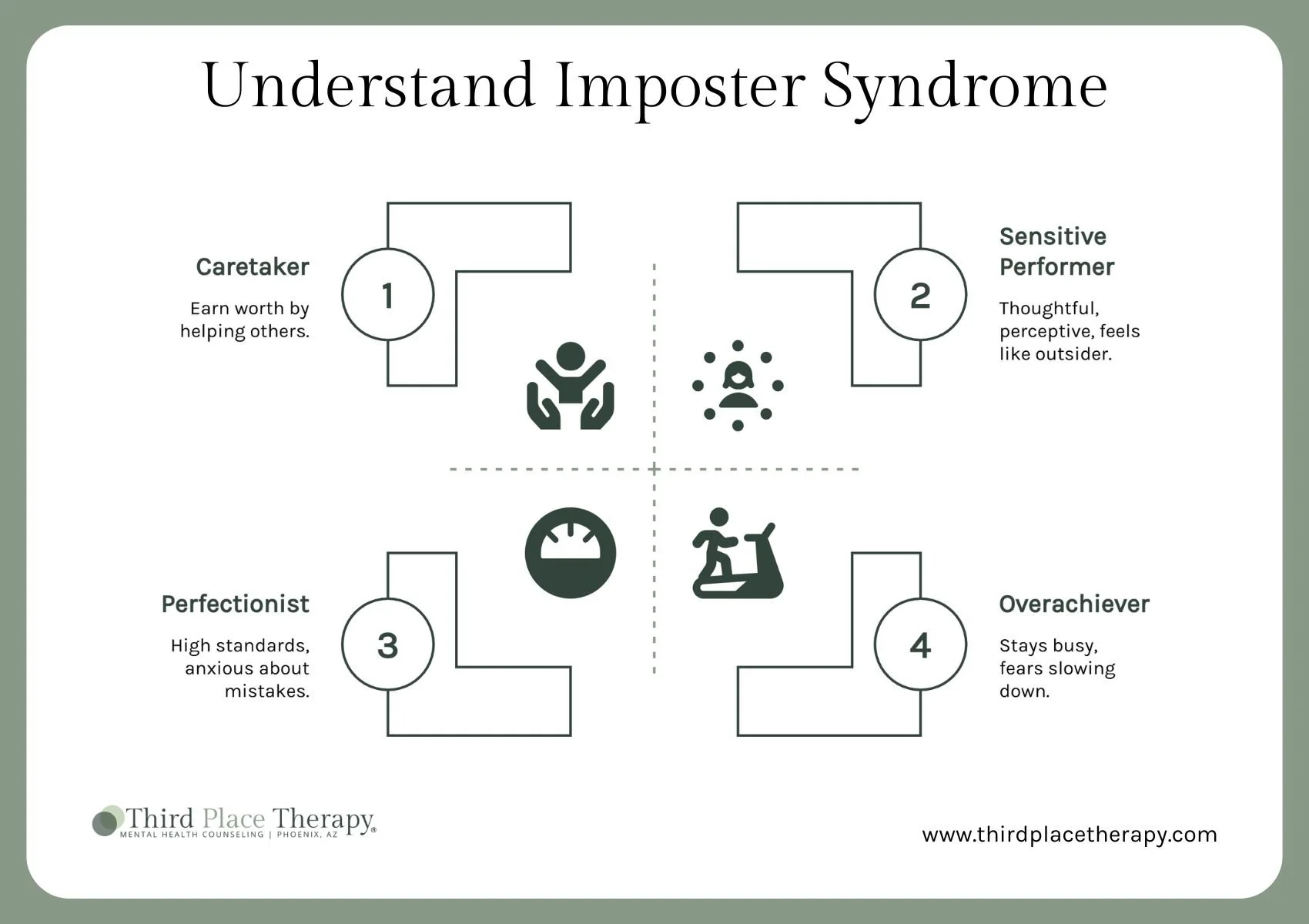
Here are a few common imposter syndrome types many people quietly recognize:
The Perfectionist
You set high standards and feel anxious when you can’t meet them perfectly. Even small mistakes can make you feel like you don’t belong. You might overprepare or struggle to celebrate wins because they never feel complete.
The Overachiever
You stay busy and productive, but slowing down brings discomfort. You worry that if you stop performing, people will see through you. Success can feel fragile rather than secure.
The Caretaker
You earn worth through helping others. You show up reliably for everyone else but doubt your own needs or value. Praise may feel uncomfortable or undeserved.
The Independent Type
You prefer doing things alone and find it hard to ask for support. Accepting help can trigger the fear that you’ll be exposed as not capable enough.
The Sensitive High Performer
You’re thoughtful and perceptive but often feel like an outsider, even when you’re welcomed. You may quietly question whether you truly belong.
The Parts of You That Learned to Doubt
From an Internal Family Systems perspective, self-doubt is often a protective part, not a flaw. These parts were developed to prevent shame, rejection, or failure. For example:
A perfectionist part tries to keep you safe from criticism.
An overworking part tries to ensure acceptance.
A self-doubting part scans for risk so you won’t be caught off guard.
Rather than pushing these parts away, we can get curious. When you approach imposter feelings with compassion instead of criticism, they often soften. The goal isn’t to eliminate them overnight. It’s to understand what they’ve been trying to protect and slowly build a steadier sense of self-trust.
Who is affected by imposter syndrome?
Anyone can experience imposter syndrome, but it’s especially common among high-achieving, thoughtful people who care deeply about doing well and belonging.
How to Heal from Imposter Syndrome
If you live with imposter syndrome, you might wonder, Will I ever stop feeling this way? Healing doesn’t mean losing your ambition or drive. It means building a steadier sense of self so your success feels more like something you can stand on rather than something you might lose.
Notice Imposter Thoughts Without Automatically Believing Them
When imposter syndrome shows up, it often sounds like:
“I don’t belong here.”
“They’ll realise I’m not good enough.”
“I just got lucky.”
Instead of arguing with these thoughts, try observing them.
Example: Before a presentation, you think, I’m going to mess this up.
Pause and ask: What is this part of me afraid of right now?
This creates distance between you and the self-doubt.
Let Your Achievements Register in Your Nervous System
People with imposter syndrome often move past wins quickly. They dismiss praise or attribute success to luck.
Try this instead:
Pause when something goes well.
Let yourself feel the moment for a few seconds.
Notice any discomfort without pushing it away.
This helps your brain learn that success is safe and real.
Understand How Imposter Syndrome Affects Relationships
Imposter syndrome doesn’t only affect work. It often shows up in dating, friendships, and parenting.
You might:
Choose partners who feel slightly out of reach.
Assume people will leave once they know you.
Overgive to feel secure.
Recognising these patterns is the first step toward changing them.
How can managers help employees overcome imposter syndrome?
Managers can offer clear feedback, recognize effort and growth, and create a supportive environment where mistakes are safe and learning is encouraged.
Build Self-Trust Instead of Chasing Constant Confidence
Healing from imposter syndrome isn’t about feeling confident all the time. It’s about trusting yourself even when you feel unsure.
You can build self-trust by:
Keeping small promises to yourself
Allowing mistakes without harsh self-criticism
Letting support in instead of doing everything alone
Over time, self-trust feels steadier than forced confidence.
Get Support if Imposter Syndrome Feels Stuck
If imposter feelings are persistent, working through them with support can help. Many people find it useful to explore:
Old experiences that shaped their self-doubt
The “parts” of them that overwork or withdraw
Relationship patterns that reinforce insecurity
You don’t have to fix this alone. Having a space to reflect and make sense of your patterns can make healing feel less overwhelming.
What Does Healing From Imposter Syndrome Actually Feel Like?
Most people don’t suddenly become fearless. Instead, they notice gradual shifts:
You still care about doing well, but you’re less afraid of being exposed.
Compliments feel uncomfortable, but you don’t dismiss them immediately.
You feel more at home in your life and relationships.
The goal isn’t perfection. It’s feeling more settled in who you already are.
If you recognise yourself here, that awareness is already a meaningful step. Healing from imposter syndrome starts with understanding, and it grows through small, compassionate changes over time.
Ready to Feel More at Home in Your Own Life? Let’s Talk.
If you’re tired of feeling like a fraud in a life you’ve worked hard to build, you don’t have to keep carrying that quietly.
I work with high-achieving adults who look capable on the outside but feel uncertain inside, especially in relationships. Our work is calm, collaborative, and paced with care.
I draw from EMDR, Internal Family Systems, and psychodynamic therapy to help you build self-trust and feel more emotionally steady.
Reaching out doesn’t mean something is wrong with you. It simply means you’re ready for things to feel different. If this resonates, you’re warmly invited to schedule a consultation.
