
What the Different Types of Anxiety Reveal About Your Inner World
You may be the one who “has it all together” - a successful career, social respect, and a life that looks enviable from the outside. Yet inside, there’s a hum of restlessness, worry, and a low-grade dread. You start to wonder why and whether it might be more than just stress.
Anxiety isn’t one single thing. There are several types of anxiety, each with its own patterns and clues about your inner world.
In this article, we'll cover:
What anxiety disorders are and why “one size” doesn’t fit all
The unique features of each type of anxiety
How to differentiate which is not a type of anxiety disorder
Ways to begin managing anxiety, and when to reach out to a mental health professional
If you’re ready to move past the surface and into real healing, let’s dive in together.

What Are the Different Types of Anxiety?
Think of anxiety as your mind–body alarm system: it’s meant to alert you to danger. But in the case of anxiety disorders, that alarm gets stuck in the “on” position, constantly ringing even when there is no immediate threat. In those moments, your thoughts, your body, and your heart all conspire to warn you that something is wrong, even when outwardly everything may look fine.
We all experience occasional anxiety, nervousness before a presentation, fear of a storm, or butterflies before a date. That’s normal, healthy, and part of life. But anxiety disorders are different: they involve excessive fear or anxiety that is disproportionate to the actual danger, that lingers, and that interferes with daily activities. When anxiety becomes chronic or overwhelming, it crosses the line from a natural emotion into a mental health condition that often requires treatment.
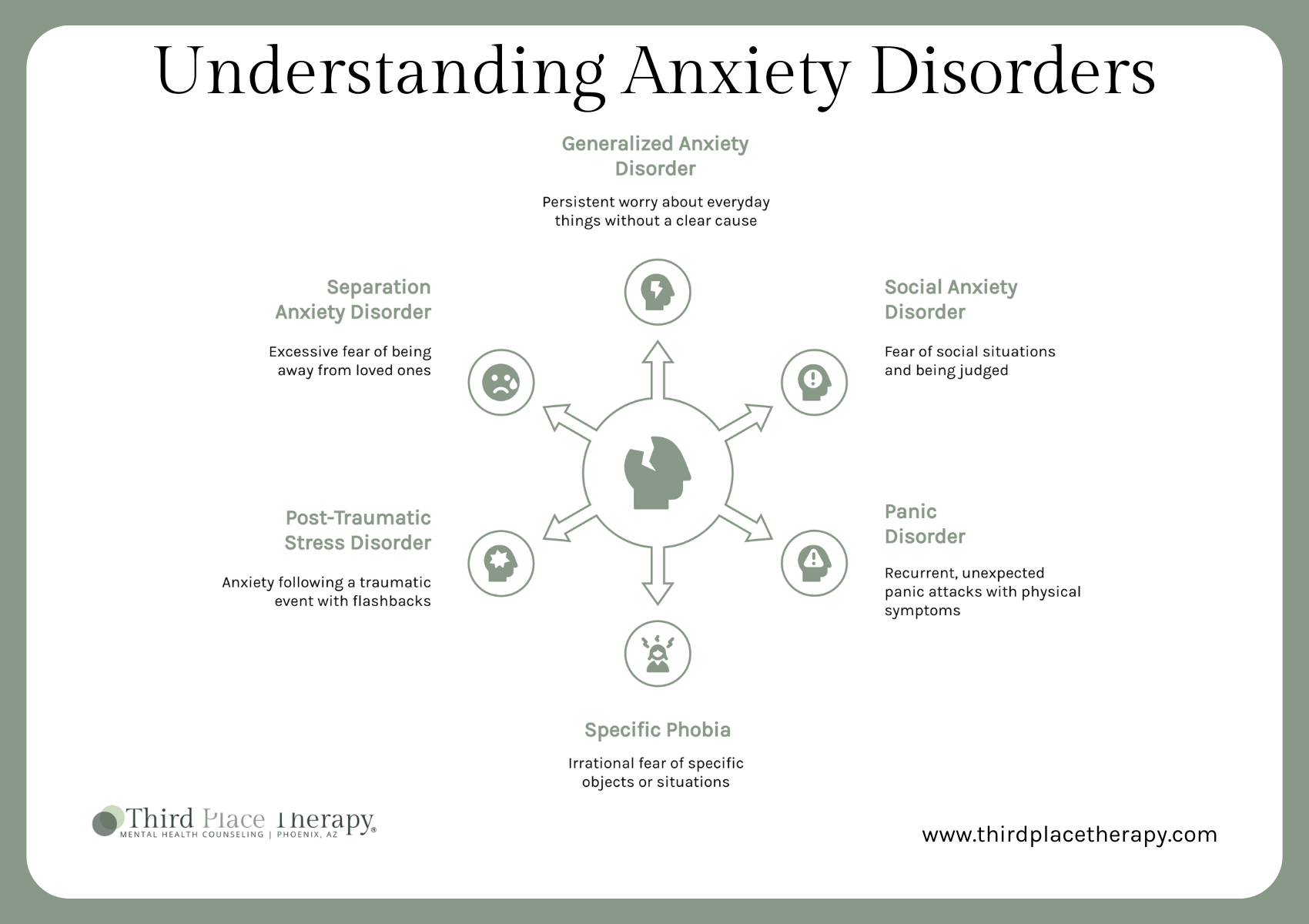
Below are the main ones therapists often see, along with how they show up, what they might reveal about your inner world, and how they differ from “normal” anxiety.
Will anxiety disorder ever go away?
Yes, it absolutely can. With the right treatment for anxiety disorders, like therapy, mindfulness, or medication, symptoms may ease and even go away over time.
Generalized Anxiety Disorder (GAD)
What it is: Persistent, excessive worry about everyday things: finances, relationships, health, often without a clear cause.
Prevalence & stats: According to the National Institute of Mental Health, in the U.S., about 2.7 % of adults had GAD in the past year.
Symptoms of anxiety: racing thoughts, muscle tension, sleep disruption, fatigue.
Inner message: GAD often points to parts of you that feel unsafe or unprepared, sometimes vestiges of needing to control uncertainty.
Social Anxiety Disorder (Social Phobia)
What it is: Fear or anxiety about social situations, worry about being judged, embarrassed, or humiliated.
Stats: According to the Anxiety and Depression Association of America, around 7.1 % of U.S. adults are affected.
Symptoms of anxiety: trembling, sweating, avoiding social settings, ruminating over conversations.
Inner message: This type often signals underlying shame, fear of rejection, or parts that feel unsafe when seen.
Panic Disorder
What it is: Recurrent, unexpected panic attacks, intense fear with physical symptoms (heart pounding, shortness of breath, dizziness).
Stats: It affects about 2.7 % of U.S. adults.
Symptoms of anxiety: sudden adrenaline floods, a sense of losing control, fear of dying or going crazy.
Inner message: Panic often indicates that something deep inside is overwhelmed, perhaps trauma or intense emotion that needs release.

Specific Phobia
What it is: Irrational fear attached to a specific object or situation: dogs, heights, elevators, needles.
Symptoms of anxiety: avoidance, sweating, panic when encountering the stimulus.
Inner message: While the fear may seem “silly,” it often carries symbolic meaning, for example, fear of falling or of being trapped.
Post-Traumatic Stress Disorder (PTSD)
What it is: Anxiety following a traumatic event, where the past feels alive in the present.
Stats: According to research published byCambridge University Press & Assessment, about 5.6% of people worldwide will experience post-traumatic stress disorder (PTSD) at some point in their lives.
Symptoms of anxiety: flashbacks, hypervigilance, emotional numbing, avoidance of reminders.
Inner message: PTSD is the mind and body’s way of trying to protect you from repeating past pain; parts remain alert and protective.
Separation Anxiety Disorder
What it is: Excessive fear or worry about being away from people you’re emotionally attached to.
Stats: According to BioMed Central, about 6.6% of adults in the U.S. experience separation anxiety disorder at some point in their lives.
Symptoms of anxiety: constant worry about losing a loved one, distress when apart, frequent check-ins, or avoidance of separation.
Inner message: This often reflects deep attachment wounds and a loud inner voice that fears abandonment.
Which Is Not a Type of Anxiety Disorder
It’s helpful to clarify that depression, obsessive-compulsive disorder (OCD), and stress alone are not types of anxiety disorders, though they often coexist with them. So, for example, while someone with depression may experience anxiety symptoms, depression itself is a distinct mental disorder with its own features.
What are 5 signs you have anxiety?
Common anxiety signs include:
- Constant worry
- Restlessness or muscle tension
- Trouble sleeping or concentrating
- Physical symptoms like a racing heart or nausea
- Avoiding things that trigger anxiety disorders
Managing Anxiety: What Helps You Find Calm Again
If you’ve been diagnosed with an anxiety disorder or think you might be living with one, you’re not stuck this way forever. Anxiety is a normal part of life, but when it becomes constant or overwhelming, it’s a sign your mind and body need some extra care. The encouraging news? There are proven ways to calm your system and feel more grounded again.
While symptoms of anxiety disorders, like muscle tension, racing thoughts, or feeling on edge, can feel intense, evidence shows that therapy, mindfulness, and lifestyle changes can make a big difference.
Here are a few treatment options that can help you begin to find relief:
1. Therapy
Cognitive Behavioral Therapy (CBT): Helps you identify and change the thought patterns that trigger excessive anxiety or avoidance.
Psychodynamic therapy: Explores how early experiences and unconscious patterns shape your fear and anxiety today.
Internal Family Systems (IFS): Helps you understand and care for the inner parts of you that carry worry, fear, or perfectionism.
EMDR (Eye Movement Desensitization and Reprocessing): Effective for people whose anxiety is tied to a traumatic event or unresolved memories.
2. Mindfulness & Grounding Techniques
Practices like deep breathing, progressive muscle relaxation, or mindful walking calm the body’s stress response.
These tools help lower the physical symptoms of anxiety, like a racing heart or shallow breathing, and bring your awareness back to the present moment.
3. Lifestyle Support
Rest: Quality sleep helps regulate your mood and nervous system.
Movement: Gentle exercise reduces stress hormones and supports overall physical health.
Connection: Talking openly with loved ones or a mental health provider helps you feel supported and less alone in your healing.
With consistent care, compassion, and the right support, people with anxiety disorders can experience lasting relief and rediscover a sense of calm that feels steady, not fleeting.
What is the #1 worst habit for anxiety?
Avoidance. It may calm you briefly, but it teaches your brain that fear equals danger. Facing triggers gently, with support, helps reduce anxiety and makes treatment more effective over time.
Explore the Roots of Your Anxiety with Compassion and Care
At Third Place Therapy, we know anxiety isn’t just about worry; it’s often a signal from deeper parts of you asking to be understood. Ourwarm, relational approach helps you gently untangle those roots with proven,compassionate methods.
We use approaches like EMDR andInternal Family Systems (IFS) to help you understand what your anxiety is really trying to say. EMDR supports your nervous system in releasing the weight of past experiences, while IFS helps you connect with the parts of you that carry worry or fear. Ouranxiety therapists create space for gentleness, self-understanding, and the kind of calm that feels steady, not forced.
Anxiety isn’t a flaw; it’s information. Let’s uncover its message together.Reach out to begin.
