
Signs of Postpartum Depression And When to Ask for Help
You planned for the sleepless nights. You didn't plan for the emptiness.
Maybe you're going through the motions of feeding, holding, responding, but feeling nothing. Maybe the sadness won't lift, the anxiety won't quiet down, or you keep snapping at people you love and don't know why. Maybe you're just not okay, and you can't explain it to anyone because you're supposed to be happy right now.
That feeling has a name. And it's not weakness, bad motherhood, or ingratitude.
Postpartum depression affects up to 1 in 8 new mothers. It's real, it's treatable, and recognizing the signs of postpartum depression early makes a genuine difference in how long it lasts.
Here's what we cover:
The most common signs of postpartum depression
What postpartum depression actually feels like
When PPD starts and who's most at risk
How long postpartum depression lasts
A simple postpartum depression checklist
Treatment options that work
Postpartum depression is most often discussed in relation to mothers who have given birth, but postpartum mood symptoms can also affect partners and adoptive parents. The important thing is not the label. It is whether you or someone in your family is struggling and needs support.
If you're in Arizona and think you may have postpartum depression, we're here to help.
Common Signs of Postpartum Depression
PPD doesn't always look the way people expect. It isn't always crying. Sometimes it's rage. Sometimes it's numbness so deep you can't feel much of anything. Here are the signs and symptoms of postpartum depression we most commonly see.
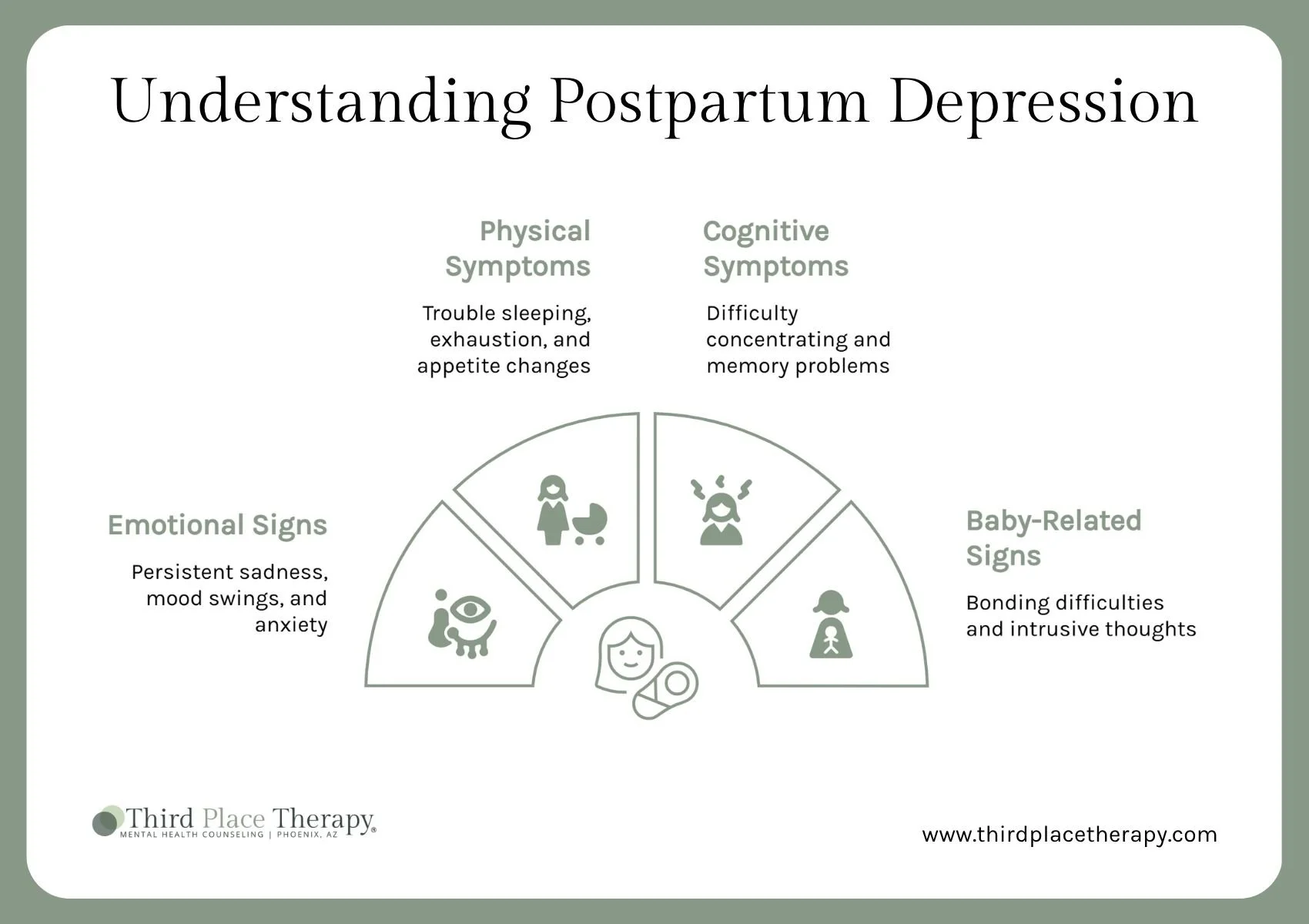
Emotional Signs and Symptoms
These are the signs most often dismissed or minimized, either by the mother herself or by the people around her. See if any of these feel familiar:
Persistent sadness or emptiness: Not just a hard day. A gray fog that won't lift, even during moments that should feel good.
Crying spells: Intense, frequent crying that happens for no clear reason or feels completely out of proportion.
Mood swings: Rapid, unpredictable shifts between sadness, irritability, and emotional numbness.
Feeling anxious or on edge: A low-grade sense of dread or panic that follows you through the day, especially around the baby.
Anger and irritability: Snapping at your partner, older children, or yourself in ways that feel out of character.
Feeling detached or numb: Going through the motions of caring for your baby without feeling emotionally present.
Guilt and shame: A relentless inner voice telling you you're not a good mother, that you don't love your baby enough, that you should be doing better.
Can postpartum depression be prevented?
PPD can't always be prevented, but the risk can be reduced. Having a support plan in place before birth, being honest with your healthcare provider about your mental health history, and getting help early if symptoms appear all make a real difference.
Physical and Cognitive Symptoms
PPD also shows up in the body and in the mind's ability to function. New parents often attribute these symptoms to ordinary newborn exhaustion, but when they persist, intensify, or interfere with daily life, they deserve attention:
Trouble sleeping: Even when the baby is asleep, you lie awake with racing thoughts or a low-level dread you can't shake.
Exhaustion that doesn't improve with rest: Bone-deep fatigue that goes beyond a rough night.
Appetite changes: Significant loss of appetite, or eating without hunger as a way to cope.
Difficulty concentrating: Trouble making simple decisions, forgetting things, or feeling like your mind is in a constant fog.
Unexplained physical symptoms: Headaches, digestive problems, or body aches without a clear physical cause.
Signs Related to Your Baby
One of the most distressing and least talked-about aspects of PPD involves complicated feelings toward your newborn. These feelings are symptoms, not character flaws, and they're more common than you might think:
Difficulty bonding with your baby: Feeling distant, disconnected, or emotionally flat when holding or feeding them.
Fear of being alone with the baby: Intense worry about something going wrong, or feeling like you're not capable of caring for them safely.
Intrusive thoughts: Unwanted, distressing images or fears about harm coming to your baby. These are different from actually wanting to hurt them, and they are a recognized symptom of postpartum mood disorders.
Thoughts of harming yourself or your baby: If you are experiencing these, please reach out for help immediately. Call or text 988 to reach the 988 Suicide and Crisis Lifeline.
Something we find ourselves saying often in sessions: having intrusive thoughts doesn't make you a bad mother. Your brain is overwhelmed and misfiring. Those thoughts are a symptom, and they're treatable.
Not sure if what you're feeling is PPD? That's exactly the kind of thing we can help you sort through. Reach out to Third Place Therapy, where we offer perinatal mental health support in Phoenix and throughout Arizona.
What Does Postpartum Depression Feel Like?
Clinical descriptions of PPD can feel cold and distant, which isn't helpful when you're in the middle of it.
The Disconnection
Many of the mothers we work with describe feeling like they're watching their own life through glass. You're physically present, feeding your baby, responding to the people around you, but you feel completely absent. Like you've stepped outside yourself.
This disconnection often extends to identity, too. The person you were before giving birth feels very far away, and you're not sure who you are in her place.
The Guilt That Makes Everything Harder
Layered on top of everything else is the guilt. The belief that you should be grateful. That needing to cry in the shower while the baby sleeps makes you a terrible mother.
It doesn't. PPD has biological roots. The drop in estrogen and progesterone after childbirth, thyroid shifts, and chronic sleep deprivation can all contribute to a mood disorder that has nothing to do with how much you love your baby or how hard you're trying.
The Loneliness
When everyone around you seems happy for you, admitting that you're struggling can feel impossible, even shameful.
We see this often. A mother comes in and says, "I didn't think I was allowed to feel this way." Part of what we do together is help her understand that she is allowed, that what she's feeling is real, and that getting help is not a failure.
When Does Postpartum Depression Start?
Postpartum depression most commonly begins within the first few weeks after giving birth, but it can develop at any point within the first year postpartum. Some mothers also notice symptoms during pregnancy that continue after childbirth; this is called perinatal depression, and it's just as real and treatable as PPD that starts after delivery.
Who Is at Higher Risk of Developing Postpartum Depression?
Anyone who has given birth can develop postpartum depression, but certain factors increase the risk. These aren't predictions; they're reasons to watch yourself more closely and speak up early if you notice symptoms:
A personal history of depression or anxiety: Including a previous episode of PPD after an earlier birth.
A family history of depression: Genetic factors play a role in susceptibility to mood disorders.
Significant life stress: Financial pressure, relationship strain, or limited practical support at home.
A difficult pregnancy or birth experience: Birth trauma or complications can increase emotional vulnerability in the postpartum period.
Thyroid changes: Postpartum thyroiditis can produce symptoms that mimic or worsen depression.
A history of trauma: Unresolved childhood or relational trauma can surface or intensify after birth, particularly during the demands of early parenting.
If you check several of these boxes, that's not a reason to panic. It's a reason to have a plan, to let your healthcare provider know, and to be honest with yourself about how you're feeling in those early weeks postpartum.
What is the difference between the baby blues and postpartum depression?
The baby blues are temporary; they usually start within the first few days after giving birth and resolve on their own within two weeks. Postpartum depression lasts longer, feels more intense, and affects your ability to function day to day. If symptoms persist for more than two weeks or are getting worse, it's worth talking to a healthcare provider.
How Long Does Postpartum Depression Last?
Postpartum depression can last anywhere from a few weeks to well over a year. That range is wide because outcomes depend heavily on whether the person receives professional help.
Without Treatment
Without treatment, PPD often persists far longer than it needs to. Depression can last for months and sometimes becomes a chronic, ongoing mood disorder that extends well beyond the postpartum period. Untreated postpartum depression also increases the risk of anxiety, strained relationships, and difficulties in the parent-child bond over time.
The CDC notes that postpartum depression is among the most common complications of childbirth, and one of the most undertreated, largely because mothers don't recognize the symptoms or feel too ashamed to ask for help.
With Professional Support
When new moms get help for postpartum depression, the timeline shortens considerably. Many people begin to feel meaningfully better within weeks of starting treatment, though the timeline depends on symptom severity, support, medication needs, and individual circumstances. That might look like therapy for anxiety and depression, medication, or a combination of both.
Postpartum depression can last for months when untreated, but it doesn't have to. Getting help is not a last resort; it's the most direct path back to yourself.
A Simple Postpartum Depression Checklist
This isn't a diagnostic tool, and it doesn't replace a conversation with your care provider. But if you're wondering whether what you're feeling warrants attention, a checklist can help you organize your experience and find language for that conversation.
Consider reaching out to your healthcare provider or a postpartum mental health therapist if you've been experiencing any of the following for more than two weeks after giving birth:
Feeling sad, empty, or hopeless most of the day
Crying spells that feel frequent or disproportionate to the situation
Significant trouble sleeping, even when the baby is asleep
Loss of interest in things you usually enjoy
Difficulty bonding with or feeling connected to your baby
Feeling anxious, panicked, or on high alert much of the time
Mood swings that feel hard to control
Withdrawing from family, friends, or your partner
Feeling like a bad mother, or like your baby would be better off without you
Thoughts of harming yourself or your baby
The Edinburgh Postnatal Depression Scale (EPDS) is one of the most widely used formal tools for postpartum depression screening, originally developed for research and now used in clinical settings worldwide. Your OB, midwife, or care provider may administer it at a postpartum appointment. If they haven't and you're concerned, you can ask specifically for a depression screening; you don't have to wait for them to bring it up.
How can you help someone with postpartum depression?
Show up practically with meals, childcare, errands, or household help without waiting to be asked. Listen without trying to fix it. Gently encourage her to speak with a healthcare provider or therapist. The most important thing is making sure she knows she's not failing, and that help is available.
Treatment for Postpartum Depression
Postpartum depression is highly treatable. The right support can help you feel like yourself again, and there's more than one path to getting there.
Talk Therapy
Therapy is one of the main evidence-based treatments for postpartum depression. Cognitive behavioral therapy (CBT) helps identify and shift thought patterns that feed depression and anxiety. EMDR therapy can be particularly effective when postpartum depression connects to birth trauma or unresolved past experiences, which we often see in our work. We also use Internal Family Systems and somatic approaches for mothers whose symptoms have deeper roots in early trauma or attachment wounds.
Medication
For many mothers, an antidepressant is a helpful part of treatment. Several options are compatible with breastfeeding. Your healthcare provider can walk you through the options, and medication combined with therapy is often more effective than either alone.
Community and Peer Support
Isolation makes postpartum depression significantly harder to move through. Postpartum Support International (PSI) offers a helpline, online support groups, and a directory of trained perinatal providers. The Office on Women's Health also provides resources and a 24/7 support line at 1-833-TLC-MAMA.
When to Get Help Immediately
If you are experiencing any of the following, please seek help right away. Call your healthcare provider, go to an emergency room, or call or text 988 to reach the 988 Suicide and Crisis Lifeline, available 24/7:
Thoughts of harming yourself or ending your life
Thoughts of harming your baby
Hallucinations, paranoia, or losing touch with reality
Severe confusion or disorientation
These symptoms may indicate postpartum psychosis, a rare but serious condition that is distinct from PPD. It's a psychiatric emergency that can develop rapidly, sometimes within the first two weeks after giving birth. It requires immediate medical treatment.
Please don't wait. If you're in crisis right now, text 988 to reach the Suicide and Crisis Lifeline. Support is available right now.

You Don’t Have to Explain This Perfectly to Get Help
At Third Place Therapy, perinatal mental health is one of our core areas of focus. We work specifically with people navigating the emotional complexity of pregnancy, birth, and the postpartum period, including those who are suffering from postpartum depression, birth trauma, postpartum anxiety, and the quieter, harder-to-name struggles that don't always fit a diagnosis.
Our approach is trauma-informed, which means we ask "what happened to you?" not "what's wrong with you?" We don't prescribe one-size-fits-all coping strategies. Instead, we use evidence-based modalities, including EMDR, Internal Family Systems, and somatic therapy, to help you understand what's driving your symptoms and find real, lasting relief.
We offer in-person therapy in Phoenix and online therapy throughout Arizona, which we know matters when you have a newborn and leaving the house feels impossible.
We also know that reaching out when you're already depleted takes something. You don't need to have it figured out before you call. You can come in not knowing exactly what's wrong, and we'll work through it together. Reach out to schedule a consultation. We're here.
